
What Does Web Development Consist Of? A Guide for Beginners
What Does Web Development Consist Of?
In the modern digital era, websites and web applications have become essential tools for businesses, organizations, and individuals alike.
But have you ever wondered what goes into building these digital platforms? This is where web development comes into play.
In this article, Star Business Boost will show you exactly what web development consists of and explore how it’s used to create websites, apps, and other online solutions.
What Is Web Development?
Web development refers to the process of creating and maintaining websites and web applications.
It encompasses a wide range of tasks, from designing user-friendly interfaces to coding complex functionalities that power online platforms. Web development ensures that digital solutions are functional, interactive, and visually appealing.
This field is vast and involves several disciplines, including front-end development, back-end development, and full-stack development. Each plays a unique role in bringing a digital product to life.
Key Components of Web Development
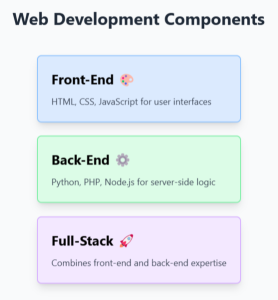
Web development can be divided into three core components:
1. Front-End Development
Front-End development focuses on the parts of a website or application that users interact with directly.
Developers use languages like HTML, CSS, and JavaScript to design layouts, animations, buttons, and other interface elements.
The goal is to create a seamless, visually appealing, and user-friendly experience.
2. Back-End Development
Back-end development handles the server-side functionality of a website. It involves writing code that manages databases, user authentication, APIs, and server interactions.
Popular back-end languages include Python, PHP, Ruby, and JavaScript (Node.js).
3. Full-Stack Development
Finally, full-stack developers are skilled in both front-end and back-end technologies. They oversee the entire development process, ensuring all components work together smoothly.
How Is Web Development Used?
Web development serves as the foundation for creating various digital solutions. Let’s explore some of its most common applications:
1. Building Websites
Web development is primarily used to create websites for businesses, personal portfolios, blogs, and e-commerce platforms. Here’s how it contributes:
- Responsive Design: Ensures the site adapts to different devices, such as smartphones, tablets, and desktops.
- Content Management Systems (CMS): Platforms like WordPress allow easy content updates without coding expertise.
- Custom Features: Developers build tailored solutions like booking systems, contact forms, and payment gateways to meet specific business needs.
2. Creating Web Applications
Web applications are interactive tools accessed through browsers. Examples include online banking systems, project management tools, and social media platforms. Web development enables:
- Scalability: Applications can handle growing user bases efficiently.
- Interactivity: Features like chatbots, user dashboards, and dynamic forms enhance user engagement.
- API Integration: Allows seamless communication between the application and third-party services, such as payment processors or map tools.
3. Developing E-Commerce Platforms
Online stores require robust web development to provide secure and efficient shopping experiences. This includes:
- Product Listings: Developers design systems to manage and display product catalogs.
- Payment Gateways: Securely process transactions using technologies like SSL encryption.
- User Experience: Fast-loading pages and intuitive navigation ensure a positive customer journey.
4. Building Mobile-Friendly Solutions
With the rise of mobile internet usage, web development often includes creating mobile-first designs and progressive web apps (PWAs). These ensure:
- Accessibility: Platforms are optimized for small screens and touch interactions.
- Offline Functionality: PWAs can work even without an internet connection, improving user accessibility.
5. Supporting Businesses and Organizations
Custom web solutions help businesses streamline operations and improve communication. For example:
- Internal Tools: Web-based dashboards and CRM systems aid in managing tasks, tracking performance, and analyzing data.
- Customer Portals: Businesses can offer clients access to personalized information and support.
Why Is Web Development Important?
Web development is crucial because it bridges the gap between businesses and their audience in the digital world. Here are some reasons why it’s indispensable:
- Enhanced Online Presence: A well-developed website boosts visibility and credibility.
- Improved User Experience: Professional web development ensures intuitive navigation, fast loading speeds, and mobile compatibility.
- Increased Engagement: Interactive and visually appealing websites capture user attention and drive conversions.
- Tailored Solutions: Custom development meets unique business requirements, offering a competitive edge.

Web Development Tools and Technologies
There are various web development tools and technologies to streamline the development process. Some of the most popular include:
- Front-End Frameworks: React, Angular, and Vue.js for building dynamic interfaces.
- Back-End Frameworks: Django, Ruby on Rails, and Laravel for server-side development.
- Version Control: Git and GitHub for tracking changes and collaborating on code.
- Hosting Platforms: AWS, Google Cloud, and Netlify for deploying websites and apps.
- Database Management: MySQL, MongoDB, and PostgreSQL for storing and managing data.
Partnering with Web Development Experts
While many tools make web development accessible, creating a professional-grade website or application often requires expertise. Partnering with skilled developers ensures:
- High-Quality Output: Expertly crafted websites with clean code and efficient functionality.
- Time and Cost Efficiency: Professionals save you time and prevent costly mistakes.
- Scalability: Solutions that grow with your business.
- Ongoing Support: Access to maintenance, updates, and troubleshooting when needed.
Unlock the Potential of Web Development
Web development is a vital component of the digital ecosystem, powering websites, applications, and countless online tools.
By leveraging professional expertise and staying updated on the latest technologies, you can harness the full potential of web development to achieve your goals. The possibilities are endless—it’s time to bring your vision to life!
FAQs
What is the difference between web development and web design?
Web design focuses on the visual aspects and user experience of a website, such as layouts, colors, and typography. Web development, on the other hand, involves building the technical functionality that makes the website work, including coding and server-side operations.
How long does it take to develop a website?
The timeline for developing a website depends on its complexity. Simple websites can take a few weeks, while larger, custom projects may take several months.
What skills do web developers need?
Web developers need skills in programming languages (e.g., HTML, CSS, JavaScript), problem-solving, database management, and familiarity with frameworks and tools like React, Node.js, and Git.
How much does web development cost?
Web development costs vary based on factors like project scope, features, and the developer’s expertise. Prices can range from a few hundred dollars for basic websites to tens of thousands for complex applications.
Can I update my website after it’s developed?
Yes, many websites are built using content management systems (CMS) that allow users to update content without technical expertise. Developers can also provide ongoing support for more advanced updates.